From Engineering to Real Estate: Khalid bin Abdullah bin Saidan on a Changing Saudi Property Market
Saudi Arabia

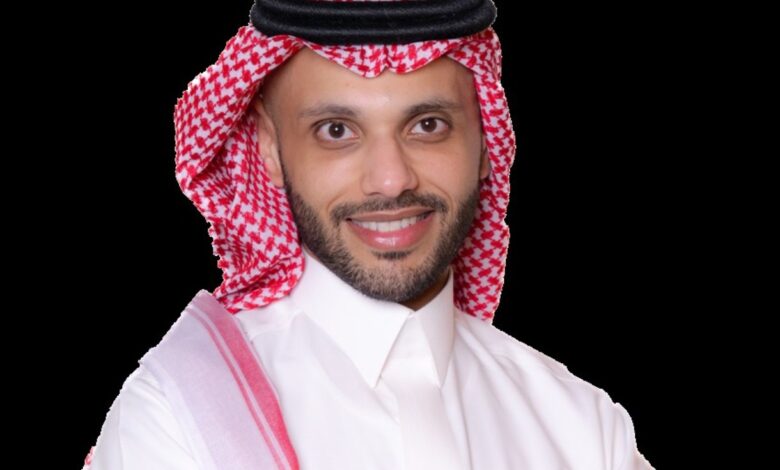
Saudi Arabia’s real estate industry is entering a more sophisticated phase. As the market expands beyond traditional development and transactions, greater emphasis is being placed on specialised services, professional management, technology and increasingly informed buyers and investors.
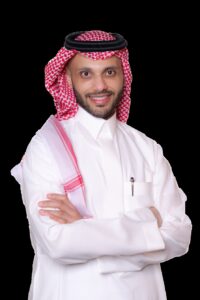
For Khalid bin Abdullah bin Saidan, Executive Director of Bin Saedan Real Estate Services, this evolution is closely connected to his own professional journey.
A civil engineer by education who later specialised in international business and project management, Khalid has built his career across different areas of Saudi real estate. Today, his responsibilities span executive leadership and board-level involvement within businesses operating across the Kingdom’s property sector.
An engineering foundation
Khalid graduated with a bachelor’s degree in civil engineering from Leeds Beckett University in the United Kingdom in 2018. He subsequently completed a master’s degree in international business management with Project Management at Kingston University London in 2020.
The combination has influenced how he approaches real estate.
“Civil engineering taught me to look at projects from a technical and analytical perspective, to understand how the different elements of a project fit together and how decisions affect cost, quality and delivery,” he says.
His postgraduate studies subsequently added another dimension.
“Studying international business management and project management gave me a broader commercial and organisational perspective. In real estate, you need both. A project has to make technical sense, but ultimately it also has to make business sense.”
Building experience across the business
Khalid’s professional experience developed through different roles within the Bin Saidan family’s real estate businesses.
He gained early professional experience with Abdullah Mohammed Bin Saedan & Sons Real Estate Company before progressing through corporate roles and later working in project management at Affordable House Company.
He subsequently moved into senior leadership at Bin Saedan Real Estate Services, where his work today encompasses areas including real estate marketing, brokerage, property management and auctions.
Alongside his executive responsibilities, Khalid serves as a member of the Board of Directors of Abdullah Mohammed Bin Saedan & Sons Real Estate Company and Prime Estates.
His career also places him within a multigenerational Saudi real estate family. But Khalid sees that history as a foundation rather than a reason to resist change.
“Their generation understood the value of reputation,” he says of the generation that preceded him. “Those values remain just as important today, even though the way we operate has changed considerably.”
For Khalid, the opportunity is to combine those established principles with “technology, data, stronger governance structures and increasingly specialised real estate services.”
A more sophisticated Saudi property market
One of the most significant changes Khalid has observed during his career is the increasing specialisation of Saudi real estate.
The industry, he argues, can no longer be viewed simply through the traditional cycle of acquiring land, developing it and selling property. Brokerage, property and facility management, investment, valuation and other professional services are becoming increasingly distinct areas of expertise.
Customer behaviour is changing at the same time.
“Buyers and investors have access to far more information, which means they ask better questions and expect greater transparency and professionalism,” Khalid says. “That is positive for the entire industry because it encourages companies to continually raise their standards.”
He also sees a more discerning generation of property buyers emerging in the Kingdom.
Location remains important, but Khalid says buyers increasingly consider accessibility, surrounding services, community, quality and the overall ownership or living experience.
Investors are becoming more analytical too, assessing rental potential, operating costs, demand, liquidity, regulatory conditions and an asset’s longer-term prospects before making decisions.
This shift, he believes, requires developers and real estate service providers to understand customers more deeply and consider the long-term value of an asset rather than concentrating solely on completing a transaction.
Technology with a purpose
Technology is another part of that transformation, although Khalid’s approach is pragmatic rather than technology for its own sake.
At Bin Saedan Real Estate Services, he identifies improving efficiency, developing people and strengthening capabilities across specialised services among his priorities, alongside adopting technology where it delivers tangible value.
Greater availability of official market information is also changing how Saudi real estate decisions are made. Khalid points to the growth of digital infrastructure and market indicators as contributing to greater transparency and more data-informed decision-making across the sector.
But he does not define progress purely in terms of expansion.
“For me, growth should not simply mean becoming bigger,” Khalid says. “It should mean becoming better at what we do and creating greater value for our clients and partners.”
Looking beyond the next transaction
That philosophy also shapes Khalid’s view of the longer-term future of the family business.
He believes every generation inherits experience from the one before it but also has a responsibility to prepare the business for those who will eventually follow.
His own ambition is to build on the family’s accumulated real estate experience while strengthening professional practices, specialised services and governance and ensuring that the business continues to adapt.
“A legacy should not only be about how long a family has been in business,” Khalid says. “What matters is whether each generation continues to create value and leaves the business stronger for the generation that follows.”